An EMC test is always going to have different needs due to the frequency range, testing environment, and standards. The importance of antenna selection cannot be overlooked in EMC testing, as it directly impacts the accuracy and reliability of measurement results. Proper choice of an antenna that meets the criteria above will guarantee accurate reception and transmission of signals. Improper antenna choice results in wrong measurements and retesting.
Understanding the Importance of Antenna Selection
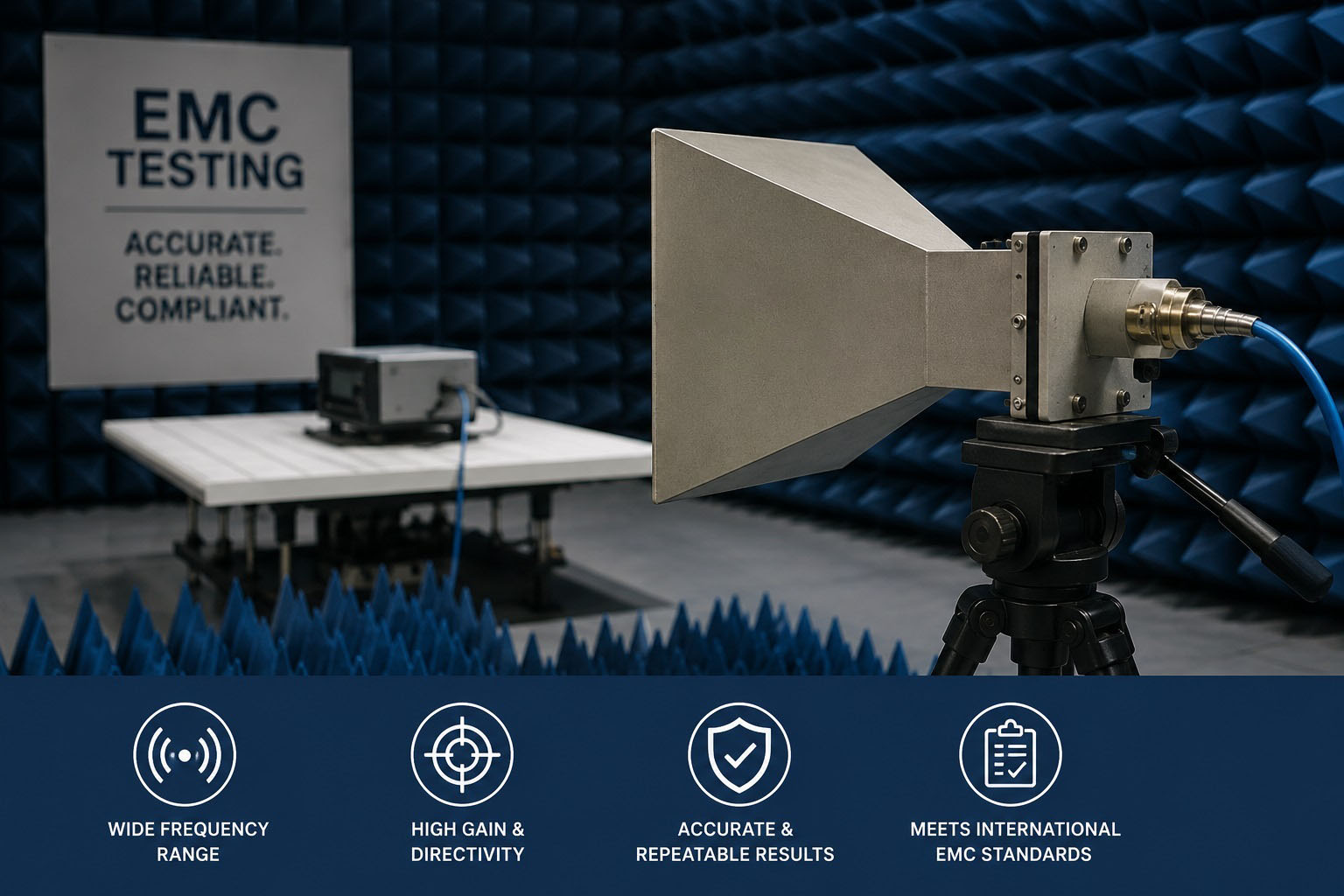
Electromagnetic Compatibility Testing is an important part of testing whether electrical products can work properly and not experience unwanted electromagnetic interference. There are many different components involved in this testing, but one of the most crucial components is the horn antenna. Horn antennas are used extensively for measuring emissions in various frequencies. It is very important to choose the right kind of antenna because the performance of your test greatly depends on it.
The most important antenna selection criteria include:
1. Frequency range
2. Gain and directivity
3. Polarization
4. Calibration accuracy
5.Testing standards
6. Measurement distance
Understanding EMC in antenna applications also helps engineers determine which antenna design is best suited for radiated emission and immunity testing.
Benefits of Choosing the Right Horn Antenna
Using the appropriate horn antenna offers several advantages during antenna emc testing:
1. Offers precision and reproducible measurements.
2. Facilitates testing over an extensive frequency range.
3. Ensures stable operation with little signal distortion.
4. Increases confidence in the EMC test results.
5. Saves time by avoiding retesting when not required.
6. Contributes to increased efficiency in testing operations.
A high-quality antenna also contributes to consistent performance in professional EMC laboratories where precision is critical.
Challenges of Incorrect Antenna Selection
Selecting the wrong antenna can create several testing challenges, including:
1. Inaccurate measurement of emissions.
2. Testing becomes less efficient.
3. Greater chance of non-compliance with regulations.
4. Extra calibration and troubleshooting.
5. Greater operational costs owing to testing.
All these problems may affect the timely release of products.
Common Applications
Applications that use the right horn antenna include:
– Radiated Emission Testing
– Radiated Immunity Testing
– EMC compliance test laboratories
– Automotive electronics testing
– Aerospace and defense testing
– Consumer electronics certification
– Wireless communication device evaluation
– Research and development laboratories
It is commonly chosen for professional EMC measurements due to its wide frequency range and directional capabilities.
Conclusion
The choice of the appropriate antenna is vital to obtaining reliable results from EMC tests. The correct use of a horn antenna increases the reliability of the tests, aids compliance with regulations, and makes testing efficient by reducing expensive mistakes. Through careful consideration of various elements including frequency, gain, calibration, and the needs of testing, engineers can attain EMC performance. The right antenna will save time and money on testing, as well as improve the quality of electronic equipment. A reliable Pine EMC Horn Antenna delivers consistent performance across a wide frequency range, helping EMC laboratories and manufacturers obtain dependable results while ensuring compliance with industry standards.
FAQs
1. Why is antenna selection critical in EMC testing?
Antenna selection helps ensure that products pass their compliance requirements through reliable and repeatable tests using the correct antenna.
2. In EMC testing, what is the purpose of a horn antenna?
A horn antenna is frequently used in radiated emissions, radiated immunity, and RF measurements within a broad frequency range.
3. What are some considerations in selecting an EMC antenna?
Some important considerations in selecting an antenna for EMC testing include frequency range, antenna gain, polarization, calibration, test distance, and standards.
4. Can the wrong antenna impact EMC test results?
Yes. The wrong antenna will result in faulty measurements, extended test times, and possibly repeat EMC tests due to compliance failure.
5. What are some industries that use horn antennas?
Horn antennas are popular in the automotive, aerospace, telecoms, consumer electronics, defense, and EMC laboratories.