Signal quality is important in every RF communication system. A weak signal can reduce performance and create communication problems. Because of this it is important to understand the causes of signal loss in RF cable. Once you know the reason you can improve system performance and reduce unwanted signal attenuation.
In simple words signal loss in RF cable means the signal becomes weaker while travelling through the cable. Some signal loss is normal. The goal is to reduce unnecessary loss so the system performs better. That’s why choosing the right cable and installing it correctly makes a big difference.
What Is Signal Loss in RF Cable?
Signal loss is also called attenuation. It happens when an RF signal loses strength while moving through a cable. Every RF cable has some amount of attenuation. The level of loss depends on cable quality, cable length, operating frequency, and installation practices.
Understanding the reason of signal loss in RF cable helps engineers solve problems before they affect the complete RF system. For that reason regular inspection and proper component selection are always recommended.
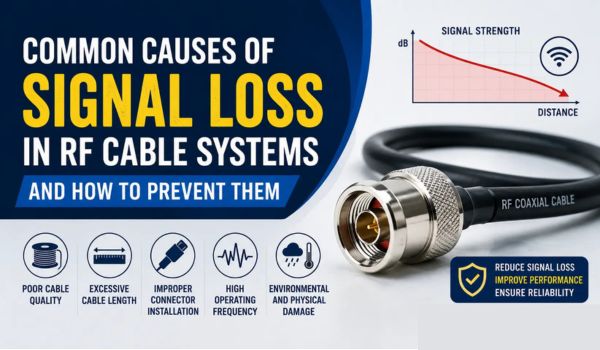
Common Causes of Signal Loss in RF Cable Systems
Signal loss happens due to several factors that affect RF cable performance.
Understanding these causes helps improve signal strength and system reliability.
Proper cable selection and installation can reduce unwanted signal attenuation
1. Poor Cable Quality
Cable quality directly affects signal performance. Low-quality materials increase resistance. Because of this the signal becomes weaker during transmission. High-quality cables provide better efficiency and more reliable performance.
2. Excessive Cable Length
Long cables create more attenuation than short cables. The longer the cable the greater the signal loss. That’s why cable length should be kept as short as possible whenever practical.
3. Improper Connector Installation
A loose or damaged connector can reduce signal strength. It can also create signal reflection and impedance mismatch. Along with that poor installation affects the overall performance of the RF system.
If you are looking for reliable cable solutions you can explore Pine EMC’s RF Coaxial Cables designed for professional RF and testing applications.
4. High Operating Frequency
Higher frequencies naturally experience greater attenuation. Because of this it is important to select cables that match the required operating frequency. Using the correct cable improves signal transmission and system reliability.
5. Physical Damage and Environmental Conditions
Sharp bends excessive heat moisture and mechanical stress can reduce cable performance. Regular inspection helps identify these issues early. That’s why proper cable routing and handling should always be followed.
How to Prevent Signal Loss in RF Cable Systems
Reducing signal loss starts with choosing quality components. Keep cable runs as short as possible. Avoid unnecessary bends. Protect cables from physical damage and inspect them regularly. Along with that use connectors that match your cable and application.
Using high-quality RF Connectors also helps maintain stable signal transmission. A secure connection reduces reflection and improves overall system performance.
Why Quality Components Matter
Every component plays an important role in an RF system. A premium cable cannot deliver the best performance if the connectors are poor or the installation is incorrect. More like a complete system every component should work together. Because of this investing in quality components improves reliability and reduces maintenance over time.
Conclusion
Signal loss cannot be removed completely but it can be reduced. Understanding the common causes helps improve RF system performance. That’s why selecting quality components following proper installation practices and performing regular maintenance are important. These simple steps help deliver stable communication and long-term reliability.
Frequently Asked Questions
1. What are the main causes of signal loss in RF cable?
The most common causes include poor cable quality, long cable length, high operating frequency, loose connectors, and physical damage. Because of these factors signal strength decreases during transmission.
2. How can signal loss in RF cable be reduced?
Choose high-quality cables and compatible connectors. Keep cable runs short and avoid unnecessary bends. Along with that inspect the cable regularly and install every component correctly.
3. Does cable length affect RF signal performance?
Yes. Longer cables create more attenuation. That’s why shorter cable runs usually provide better signal strength and improved RF system performance.