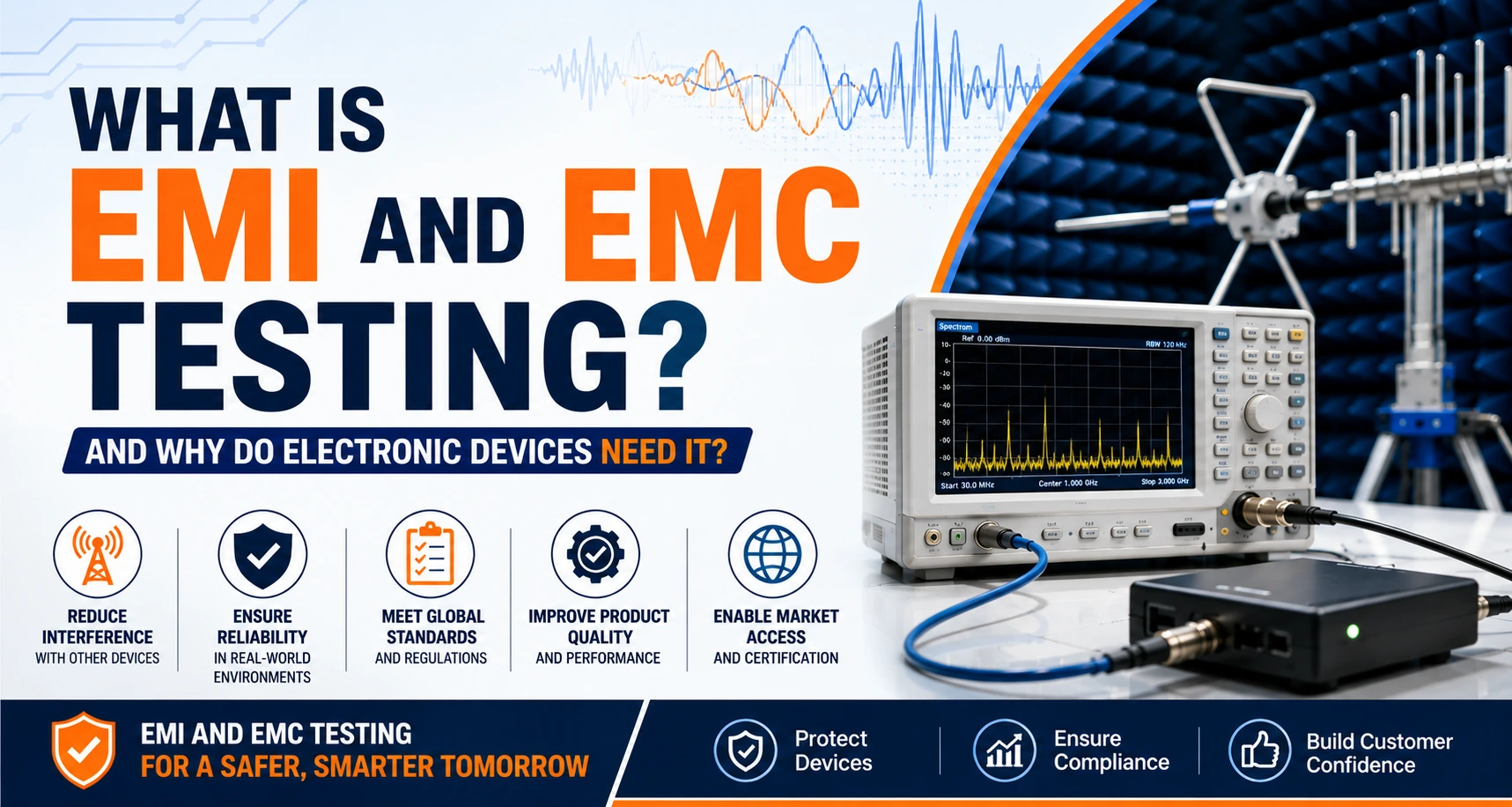
Electronic devices are all around us. We use smartphones, laptops, medical equipment, and industrial machines every day. These devices need to work properly without affecting other nearby electronics. Because of this – manufacturers perform EMI and EMC Testing before launching their products.
Testing helps identify potential interference issues early. That’s why – it is an important part of product development. At PINE EMC – we help businesses ensure their electronic products meet performance and compliance requirements.
Why EMI and EMC Compliance Is Important
Today’s electronic devices often operate in environments where multiple systems work together. Because of this – there is a higher chance of interference between products. A device that creates unwanted signals can affect nearby equipment. For that reason, manufacturers must verify that their products can perform reliably under real-world conditions.
In simple words, testing helps electronic devices work safely and efficiently without disrupting other systems.
Understanding EMI and EMC Testing
1. What Is EMI Testing?
EMI stands for Electromagnetic Interference. It refers to unwanted electromagnetic energy generated by electronic devices. This interference can affect the performance of nearby equipment. That’s why – EMI testing is performed to measure and control these emissions before products reach the market.
2. What Is EMC Testing?
EMC stands for Electromagnetic Compatibility. Electromagnetic compatibility testing checks whether a device can operate correctly in its intended environment. Along with that, it ensures the device does not create interference for other equipment. The goal is to achieve reliable performance under different operating conditions.
3. Understanding the Difference Between EMI and EMC
Many people use these terms interchangeably. However, there is a clear difference between EMI and EMC. EMI is the unwanted interference that can disrupt electronic devices. EMC is a device’s ability to function properly despite that interference. In simple words, EMI is the issue while EMC is the ability to handle that issue.
4. Benefits of EMI and EMC Testing
There are several benefits of emi and emc testing. It improves product quality and reliability. It helps manufacturers meet regulatory requirements. Along with that, it reduces the risk of costly redesigns and product failures. For that reason, testing can save both time and resources during development.
5. Why Electronic Devices Need EMC/EMI Testing
Electronic products are often used near other devices. Because of this, they must operate without causing interference. EMC/EMI testing helps verify that products perform consistently in different environments. It also supports certification requirements needed for market approval. More like a quality check, it ensures products are ready for real-world use.
Why Choose PINE EMC for Testing Services?
Pine EMC provides reliable testing solutions for a wide range of electronic products. Our experienced team and advanced facilities help manufacturers achieve compliance with confidence. Along with that, we support businesses throughout the testing and certification process. That’s why – companies trust PINE EMC for accurate and dependable results.
Conclusion
EMI and EMC Testing play a key role in the success of modern electronic devices. It helps ensure safety, performance, and compliance. Because of this – manufacturers should make testing a priority during product development. With support from PINE EMC, businesses can bring reliable and compliant products to market with confidence.
FAQs
What is EMI and EMC Testing?
EMI and EMC Testing evaluates whether an electronic device produces acceptable levels of interference and can operate properly in its intended environment.
What is the difference between EMI and EMC?
EMI refers to unwanted electromagnetic interference. EMC refers to a device’s ability to operate correctly without causing or being affected by that interference.
Why is electromagnetic compatibility testing important?
Electromagnetic compatibility testing helps ensure product safety, reliable performance, regulatory compliance, and successful certification before a product reaches the market.